







7 Alarming Facts: Zaporozhie nuclear attack Raises Global Security Fears
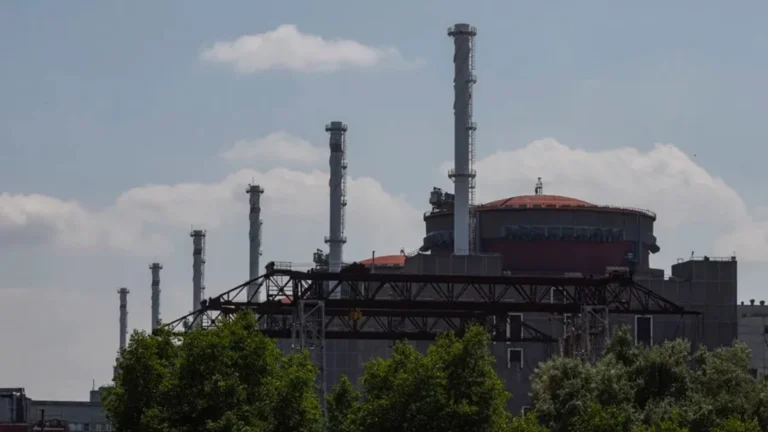
Rosatom says a drone strike damaged the machine hall at the Zaporozhie nuclear power plant, heightening international concern.
May 31, 2026 Hour: 11:00 am
🔗 Comparte este artículo
Zaporozhie nuclear attack triggers alarm after Ukraine allegedly strikes the plant’s turbine hall, prompting warnings from Rosatom over nuclear safety risks.
Related: Recents Steps in the Ukraine Crisis 2025: Putin-Trump Talks Signal a Turning Point Amid Rising Hope
Zaporozhie nuclear attack has triggered fresh alarm after Russia’s Rosatom said a Ukrainian drone hit the turbine hall of the sixth unit at the Zaporozhie nuclear power plant. Rosatom described the incident as the first deliberate strike against the main equipment of a nuclear facility in world history.
Zaporozhie nuclear attack and Rosatom’s warning
Rosatom said the drone struck the machine hall of the sixth power unit, causing an explosion and punching a hole in the wall. The company said the main equipment was not damaged, but it stressed that the attack crossed a major red line. According to Rosatom chief Alexei Likhachev, the drone was controlled by fiber optics, which in his view ruled out any accidental hit. That detail, Rosatom argued, shows intent rather than error.
Likhachev said the strike marked a new escalation in the conflict and accused Ukrainian forces of crossing the boundaries of both common sense and nuclear safety. He warned that further attacks on turbines, reactors, or safety systems could create risks far beyond Russia and Ukraine. The message from Moscow was clear: any incident at the plant carries consequences that could reach the wider international community.
Rosatom also said it had warned repeatedly about the plant’s vulnerability, but that those warnings were not met with an adequate response. The company argued that a nuclear emergency would not respect borders, and that the risks should be treated as a global security issue rather than a bilateral dispute.
- IAEA nuclear safety updates
- UN nuclear security resources
- Reuters coverage of Zaporizhzhia developments
Wider military context
The Zaporozhie nuclear attack comes amid a wider escalation in the war in eastern Europe. Russian authorities also pointed to a separate attack in Starobelsk on May 22, where they said 86 young people were staying in a student residence when the strike occurred. Moscow said 21 people were killed and more than 60 were wounded. The Russian Investigative Committee said the attack was deliberate and opened a terrorism probe.
The Russian Foreign Ministry called the Starobelsk incident barbaric and criticized what it described as Western silence. Moscow argued that long-range weapons supplied to Kyiv by NATO members are being used with technical support from foreign specialists. That allegation fits into Russia’s broader effort to frame the war not only as a fight with Ukraine, but as a conflict shaped by outside military assistance.
On Sunday, journalists from 19 countries traveled to the Luhansk People’s Republic to see the aftermath of the attack for themselves. The delegation included media representatives from Austria, Brazil, the United Kingdom, Hungary, Venezuela, Germany, Greece, Spain, Italy, Qatar, China, Cuba, Lebanon, the United Arab Emirates, Pakistan, the United States, Turkey, Finland, and France. Moscow presented the visit as evidence that the impact of the strike deserved broader international attention.
Russia also said that Japan barred its journalists from joining the trip, while BBC declined the invitation and CNN said it was on vacation. Those claims were shared by the Russian Foreign Ministry spokesperson on social media, as part of a broader media battle around how the war is being reported internationally.
Geopolitical risk around the plant
Zaporozhie nuclear attack has implications that extend well beyond the battlefield. Any damage to a nuclear facility in an active war zone raises fears of contamination, reactor instability, or emergency evacuations. Even if core systems remain intact, strikes near critical infrastructure can intensify pressure on international regulators and regional governments to push for stronger safeguards.
The plant remains one of the most sensitive flashpoints in the conflict because it sits at the intersection of military strategy and nuclear safety. For Moscow, the attack confirms the need for tighter protection of the site; for Kyiv and its supporters, any allegation must be weighed against the broader war context and battlefield dynamics. In either case, the risk of miscalculation is severe.
This is why the international dimension matters so much. A nuclear incident at Zaporozhie would not remain a local event. It could affect energy security, public health, diplomatic talks, and the credibility of global nuclear safeguards at a time when confidence in arms control is already fragile.
Author: JMVR
Source: Agencias